


What if the website visitor who left without requesting a quote simply needs a more useful next step? Retargeting ads for tradies can bring eligible prospects back with a relevant reminder. They work best alongside a clear offer and timely follow-up, not as a replacement for either.
It’s frustrating when potential customers visit your website but don’t enquire, especially when your advertising spend isn’t turning that interest into leads. Audience settings, exclusions and tracking can also feel technical, making it hard to know where to start.
This guide explains how to build, compare and improve practical retargeting campaigns. You’ll learn which visitors to re-engage, how to choose an ad platform and how to connect your creative to a clear next step, such as requesting a quote. We’ll also cover audience exclusions and tracking, so you can assess qualified enquiries and booked work, not just clicks. When ads, landing pages and lead tracking work towards the same goal, regular monitoring can help you make more considered campaign adjustments.
Key Takeaways
- Retargeting ads for tradies can give eligible website visitors a relevant reason to return, but they work best alongside a clear offer and timely follow-up.
- Build your campaign in practical steps: set a goal, check tracking, define audiences, create ads and review the enquiries generated.
- Compare Meta and Google based on the audiences and ad formats available to your business, then choose the option that suits your campaign goals.
- Make each ad relevant to the service a prospect viewed, with credible proof, a clear next step and a matching landing page.
- Judge performance by qualified calls, quote requests and booked work, alongside audience size, ad frequency and lead quality.
Retargeting Ads for Tradies: Why Interested Prospects Need a Second Chance
A website visit doesn’t always mean someone is ready to book. They may be comparing options, finding out what a job involves or waiting until they’re ready to request a quote. Retargeting ads for tradies give eligible people who have already interacted with your business another opportunity to take a relevant next step.
The journey is straightforward: someone discovers your service, visits a related page, leaves without enquiring and later sees a reminder through an advertising platform. This is a form of behavioral retargeting, where advertising can draw on previous online behaviour. The audience a business can reach depends on its tracking setup and platform settings.
Retargeting can support lead generation, but it won’t fix a weak offer or confusing landing page. If the page doesn’t explain the service clearly or make it easy to enquire, another ad may simply send the prospect back to the same problem.
What retargeting means for an Australian trade business
Website-visitor retargeting aims ads at eligible people who visited your site, such as a particular service page. Social-platform retargeting can reach eligible people who interacted with your business’s content or profile on that platform. These are separate audience sources. A social engager hasn’t necessarily visited your website, and not every site visitor can be reached.
A reminder may suit a considered job, such as replacing a fence. Someone who read about fencing services may need time to compare options, plan the work or request a quote. An urgent repair is different: someone with an immediate problem is more likely to need a direct way to contact a tradie now than repeated reminders later.
When a second-touch ad helps, and when it doesn’t
A useful starting audience is people who viewed a specific service page but didn’t enquire. For example, a fencing business might show that group an ad about its fencing service, with a clear invitation to discuss the job. The message should connect to what people viewed, rather than rely on a generic “we do it all” claim.
Those visitors have shown more relevant interest than people who haven’t interacted with the business. Retargeting is designed to reconnect with eligible previous visitors or engagers, not create intent from scratch. Reaching new prospects calls for a broader lead-generation approach.
Check the basics before increasing spend. Inaccurate tracking can build the wrong audience or miss important actions. Weak creative gives people little reason to return, and irrelevant repetition can make the business feel intrusive. The ad, offer and landing page need to work together, each providing a clear and useful next step.
How Retargeting Ads Work: Build Tradie Audiences and Track Enquiries
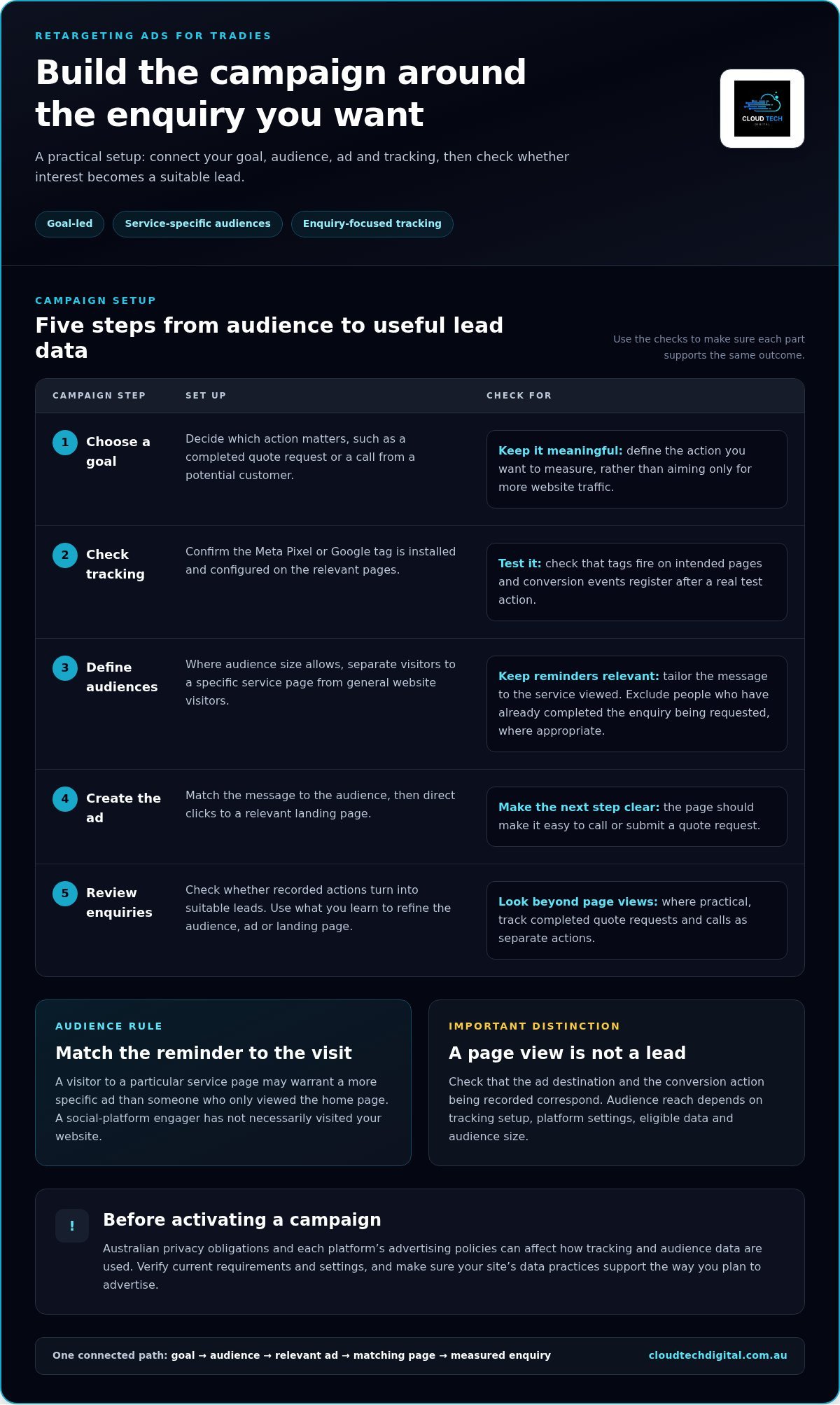
A useful retargeting setup starts with the outcome you want, then connects audience rules, ads and tracking to that outcome. For retargeting ads for tradies, the goal might be to bring suitable service-page visitors back to request a quote, rather than simply increase website traffic.
- Choose a goal. Decide which action matters, such as a completed quote request or a call from a potential customer.
- Check tracking. Confirm the Meta Pixel or Google tag is installed and configured correctly on the relevant pages. Each can help record website activity for advertising and measurement, but neither works reliably just because it appears in the site code.
- Define audiences. Where audience size allows, separate visitors to a specific service page from general website visitors. This gives you the option to tailor the reminder to the service they considered.
- Create the ad and next step. Match the message to the audience, then send clicks to a relevant landing page with a clear action, such as calling or submitting a quote request.
- Review enquiries. Check whether tracking records meaningful actions and whether those actions turn into suitable leads. Use what you learn to refine the audience, ad or landing page.
Choose audience sources and set sensible exclusions
Audience rules help keep reminders relevant. A visitor to a particular service page may warrant a more specific ad than someone who only viewed the home page. If someone has already completed the enquiry you’re asking for, exclude them where another prompt would be irrelevant. Audience duration and reach depend on platform settings, eligible data and audience size, so don’t assume every visitor can be included.
Before launch, test that tags fire on the intended pages and that conversion events register after a real test action. A page view alone isn’t a lead. Where practical, track completed quote requests and calls as separate actions so your reporting distinguishes interest from an actual enquiry. Check that the ad’s destination and the conversion action being recorded correspond.
Australian privacy obligations and each platform’s advertising policies can affect how tracking and audience data are used. Verify current requirements and settings before activating a campaign, and make sure your site’s data practices support the way you plan to advertise.
For a broader walkthrough of the platform workflow, Coursera explains how to implement Google Ads remarketing. Apply those principles to your own goal, audience and measurement setup. To align campaigns, landing pages and lead tracking, explore practical lead-generation support.
Meta or Google Retargeting Ads for Tradies: Compare the Right Fit
Meta and Google can both help reconnect with eligible people who have interacted with your business, but they reach audiences in different ways and support different creative. The right choice depends on where your prospects spend time, what they’ve already done and what you want them to do next. Neither platform is automatically the better fit for every trade business.
| Factor | Meta | |
|---|---|---|
| Audience source | Eligible website visitors and people who’ve engaged with your business on Meta platforms, subject to setup and available data. | Eligible past website visitors or other audience groups supported by the account and campaign format. |
| Creative format | Visual ads that can combine images or video with concise service messaging. | Formats vary by campaign and placement, and may include visual ads or text-based ads. |
| Likely use | Show a relevant visual reminder to an eligible audience as they use Meta platforms. | Reconnect with eligible visitors across available Google advertising placements and formats. |
When Meta retargeting may suit a trade service
Meta may suit a campaign where visual proof helps explain the work. A trade business could use an image of a completed job, a short service explanation or a clear invitation to request a quote. Website visitors and people who engaged with social content are different audience groups, so tailor the message to how each group interacted rather than treating them as one pool. For more on the platform, see Facebook Ads for Tradies.
When Google retargeting may support the customer journey
Google remarketing can reconnect with eligible past visitors across available campaign formats and placements, depending on audience data, settings and campaign configuration. Keep the ad and landing page relevant to the service originally viewed. If someone explored plumbing services, a broad message about unrelated work can weaken the connection. A reminder should make it easy to continue considering that specific job. Learn more in this guide to Google Ads for Plumbers Australia.
When choosing retargeting ads for tradies, match the platform to audience behaviour and your campaign goal, then compare the quality of the enquiries it helps generate. A visual reminder may suit one audience, while another may respond to a different available format. Tie the ad to the prospect’s previous interaction and measure the result beyond clicks.
Create Retargeting Ads That Turn Tradie Website Visits into Enquiries
A second-touch ad needs to do more than remind someone your business exists. It should connect the service they viewed with a helpful reason to take the next step. Use this checklist to keep each part of your retargeting campaign working towards the same outcome:
- Match the message: Reflect the service page the person visited. A visitor researching roof repairs should see a relevant roof-repair message, not a generic ad about every trade service you offer.
- Show credible proof: Use genuine project images, service explanations or customer feedback only when you have permission and the details are accurate. Don’t make claims your business can’t support.
- Offer a clear next step: Tell people what to do, such as requesting a quote or viewing the relevant service information.
- Check the landing page: Make sure it continues the same message and makes the next action easy to find.
- Plan for follow-up: Make sure enquiries can be reviewed and responded to consistently. A relevant ad can prompt an enquiry, but the value of that lead also depends on what happens next.
Write useful reminders instead of repetitive sales pitches
Give prospects information that helps them decide. If someone viewed a service page but left, an ad could explain what a quote request involves or point them to more details about that service. Keep the wording practical and specific. Retargeting ads for tradies should feel like a useful continuation of the visit, not the same sales pitch shown repeatedly.
Monitor how often the audience sees each ad and look for signs that the creative is losing relevance, such as declining engagement or fewer useful enquiries. Refresh the message or creative when needed. There’s no single frequency that suits every audience. The right approach depends on audience size, campaign settings and response.
Connect the ad, landing page and enquiry follow-up
A prospect who clicks an ad about one service should land on a page about that same service. Keep forms focused on the details the business needs to respond appropriately, such as the type of work and how to get in touch. Unnecessary questions can add friction, while too little context can make it harder to assess and respond to the enquiry.
Follow-up matters, too. When a potential customer requests a quote, a prompt and consistent response helps keep the conversation moving. Consider your quoting workload and job capacity when reviewing campaign enquiries. A high volume of requests isn’t useful if the business can’t respond or the leads don’t suit the work it wants.
For more on aligning your website with enquiry goals, read this guide to high-converting tradie website guidance. To bring your campaign, landing page and lead tracking into line, explore lead-generation support.
Measure Retargeting Results and Improve Your Tradie Campaign
Clicks and impressions show whether people are noticing your ads. They don’t show whether the campaign is bringing in suitable work. For retargeting ads for tradies, connect platform reporting to the outcomes that matter to your business: qualified calls, relevant quote requests and jobs booked.
Read the numbers together, not in isolation. A small audience may limit delivery, while frequent exposure without enquiries could point to tired creative or an offer that isn’t resonating. Cost per enquiry helps show what you’re paying to generate a response, but lead quality matters too. A lower cost isn’t necessarily useful if enquiries are outside your services, don’t suit your quoting capacity or rarely progress to booked work.
Use a simple review cycle to improve campaign performance
Start by checking that campaign delivery and conversion tracking are working as intended. If calls or quote requests aren’t recorded accurately, the results can’t guide good decisions. Once tracking is sound, compare audience groups and creative based on the quality of enquiries they generate, not just clicks or engagement.
Where practical, make one meaningful change at a time, such as adjusting the audience, refreshing the ad or improving the landing page. Then review what changed in delivery, enquiries and lead quality. This makes it easier to assess which adjustment may have helped and avoids drawing conclusions from a short-lived change in clicks.
Keep the realities of the trade business in view. If suitable enquiries arrive but quoting is delayed, the bottleneck may be follow-up rather than the ad. If the team is already at capacity, consider campaign performance alongside the work available to take on. Regular monitoring and lead tracking can help identify where to focus next, without promising a particular result.
Make retargeting part of a wider lead-generation plan
Retargeting is one part of the customer journey. Paid campaigns can bring targeted attention, a relevant landing page can help turn interest into an enquiry, and organic visibility can help prospective customers find useful service information. Aligning these touchpoints gives people a more consistent path from researching a job to getting in touch. For a broader view, read the Australian tradie lead-generation guide.
Cloud Tech Digital’s campaign monitoring, lead tracking and strategy adjustments help connect advertising activity with business outcomes. Discuss a lead-generation strategy for your trade business to take a considered next step.
Turn Interested Visits into Your Next Enquiry
Retargeting works best as part of a considered lead-generation plan. Choose audiences based on relevant activity, match each ad to the service a prospect viewed and make sure the landing page offers a clear next step. Then measure what matters: qualified calls, quote requests and booked work, not clicks alone.
Keep reviewing the full journey. Accurate tracking, useful creative and consistent follow-up help you understand whether campaign activity is leading to suitable enquiries. Review the results and adjust thoughtfully, taking your quoting workload and job capacity into account.
Cloud Tech Digital is an Australian-owned and operated agency serving trade businesses nationally. Ongoing campaign management includes performance monitoring, lead tracking and strategy adjustments. Client testimonials report measurable sales increases and rapid lead turnover, though results can vary.
Ready to make your website visits work harder? Build a smarter lead-generation strategy for your trade business with a plan that puts retargeting ads for tradies in context with your wider goals.
Frequently Asked Questions
What are retargeting ads for tradies?
Retargeting ads for tradies are paid ads shown to eligible people who have previously interacted with a trade business online. That might include visiting a service page or engaging with the business on a social platform. For example, someone who reads about electrical upgrades could later see a relevant reminder. The aim is to offer a useful next step, such as viewing service details or requesting a quote, rather than repeatedly showing a generic ad.
Are retargeting ads worth it for a small trade business?
They can be worthwhile if your business has enough eligible visitors or social engagers to reach and can track genuine enquiries. Start by checking whether the audience is relevant, the ad leads to a useful page and conversions are measured accurately. Then assess qualified calls, quote requests and booked work, not just clicks. If the audience is too small or the offer and landing page need work, address those issues before expecting ads to generate suitable leads.
How do retargeting ads work on Meta and Google?
Meta and Google use eligible audience data to show ads to people who previously interacted with a business, subject to platform settings and correct tracking setup. Meta can use website activity or engagement on its platforms; Google can use eligible website audiences in supported campaign formats. A Meta Pixel or Google tag may help record activity and conversions when configured properly. The ad should lead to a relevant page, and tracking should measure actions such as quote requests or calls.
Can retargeting ads generate leads for plumbers, electricians and builders?
Yes, retargeting can support lead generation for plumbers, electricians and builders by reminding eligible prospects about a service they’ve already explored. A plumber could tailor an ad to visitors of a hot-water service page, while a builder could direct past visitors to relevant project information. Results depend on audience eligibility, the offer, creative, landing page and follow-up. Measure whether enquiries suit the work the business wants, rather than treating every click as a qualified lead.
How long should a tradie retarget website visitors?
There’s no single audience duration that suits every trade business. Choose a period that reflects how long prospective customers typically take to consider the service, then review whether the audience remains relevant and the ads are producing useful enquiries. Platform settings and eligible data affect the duration available. Avoid keeping people in an audience by default without a clear reason, and check current platform policies and applicable Australian privacy requirements before setting campaign durations.
What happens if a retargeting audience is too small?
A small audience may limit how often a campaign can deliver, or prevent it from running effectively under platform requirements. First check that tracking and audience rules are set up correctly. If they are, consider combining closely related service-page visitors or including relevant social engagers, where suitable. Don’t broaden the audience so far that the ads lose relevance. Monitor delivery and enquiry quality together to see whether the revised group still reflects potential customers.
Do Australian trade businesses need consent for retargeting ads?
Consent requirements depend on the data collected, how it’s used and the laws and platform policies that apply to the business. Don’t assume that installing an advertising tag automatically makes its use appropriate. Review current Australian privacy guidance and the relevant platform requirements before collecting or using data for retargeting. Make your website information clear about relevant data practices, and obtain consent where required. Get current professional advice if you’re unsure how obligations apply to your circumstances.
