

A tradie website’s price depends on what’s included, not just the initial build. The tradie website design cost in Australia varies with the site’s scope, design requirements and ongoing inclusions, with a provider’s price given after a quote request. Pages, email accounts and included change hours can all affect the final package.
Compare the details behind each quote before choosing. A lower upfront price may include fewer pages or less support for updates, while a more complete package may cover features that suit how your trade business works.
This comparison explains how tradie website packages differ, including options for plumbers, electricians, builders and painters. You’ll learn what to look for in page counts, email accounts and change hours, and how to weigh those inclusions against your needs. Use it as a practical basis for comparing prices and choosing a website that fits your business.
Key Takeaways
- Compare the full cost of ownership, including domain, hosting, maintenance and email, rather than focusing only on the initial build.
- Match the website structure to your trade: service pages should make it easy for customers to find the work you do.
- Check how many pages, email accounts and change hours each package includes so you can judge what it covers after launch.
- Use the decision guide to weigh DIY, freelancer, agency and specialist tradie options against your budget, time and business needs.
How Much Does a Tradie Website Cost?
Separate the initial build from the ongoing costs of keeping your website online and maintained. Domain, hosting, email and care-plan inclusions can change the total you pay over time.
Domain, hosting and email expenses
A domain is your website’s address; hosting stores its files so visitors can access it. Email accounts may use the same domain, but each expense can renew separately. Compare renewal periods and account limits, then record each ongoing charge separately. A business email address using your domain, for example, is distinct from a personal inbox.
Maintenance, security and ongoing care
Hosting keeps a site online, while maintenance covers work such as software updates and troubleshooting. Security measures, SSL and backups serve different needs: SSL protects data moving between a website and its visitors, while backups provide a copy for restoration. Care plans may combine these tasks or charge for them separately. Compare the exact inclusions and frequency rather than treating “maintenance” as a complete description.
Are website design expenses tax deductible for Australian tradies? Tax treatment depends on the expense’s business purpose and whether it relates to ongoing operation or the creation of a lasting asset. Keep invoices that separate design, hosting and email costs so the nature of each expense is clear.
Do Australian tradies need to meet privacy, accessibility or consumer law requirements on their websites? Consider these issues in light of what the site does: collecting customer details, making service claims or presenting information to visitors. Clear service descriptions, accessible content and careful handling of enquiry details are practical starting points.
| Option | What you manage | Ongoing items to compare |
|---|---|---|
| DIY platform | Setup and routine changes | Domain, hosting, email and platform features |
| Freelancer or agency build | Build scope and handover | Hosting, updates, backups and support inclusions |
Compare renewal costs and care-plan inclusions alongside the build scope.
Websites for plumbers, electricians, builders and painters
The build tier affects who handles the work, while your trade and project scope shape the site. Your quote depends on design, content, functionality and ongoing inclusions, with the exact figure based on your project.
DIY and freelancer builds
A DIY site uses a template and your own time; a freelancer handles the build. DIY setup can take 20 to 40 hours, including writing copy, choosing images and adjusting mobile layouts. A plumber might create a basic services page, while an electrician may need clearer sections for different work. Freelancers reduce setup demands, with the brief guiding their scope.
Professional and agency builds
A professional build suits tradies who want a tailored business website without managing every technical task. An agency can coordinate design, page structure and content as one project. For builders, that might mean presenting project examples and quote enquiries clearly. For painters, service areas and finish options may need distinct sections. The scope drives the work, not the trade label alone.
Monthly website build pricing
Monthly arrangements spread payments over time, unlike a one-off build. Compare what the recurring payment covers: design and build, hosting, maintenance, support or marketing work. Also check the agreement term, ownership of the finished site and what happens if payments stop. An electrician who needs a straightforward service site may value a different package from a builder adding project content.
Advertised upfront build prices
Upfront prices make initial comparisons simpler, but the headline figure may cover only a defined scope. Check whether content writing, trade-specific pages, mobile presentation and post-launch changes are included. A plumber needing separate hot-water and drainage information has different requirements from a painter with a compact service range. Compare written inclusions, exclusions and handover details before weighing advertised offers.
Website pages, email accounts and included change hours
A useful tradie website makes services, proof and contact details easy to find. Features such as service pages, a contact form and included updates affect the build scope and package.
What features should a tradie website include, and how do they affect the price? Prioritise clear service information, a contact form and relevant project examples. More pages, galleries and custom functions add design and content work, while included change hours affect how much you can update after launch.
Pages, galleries and case studies
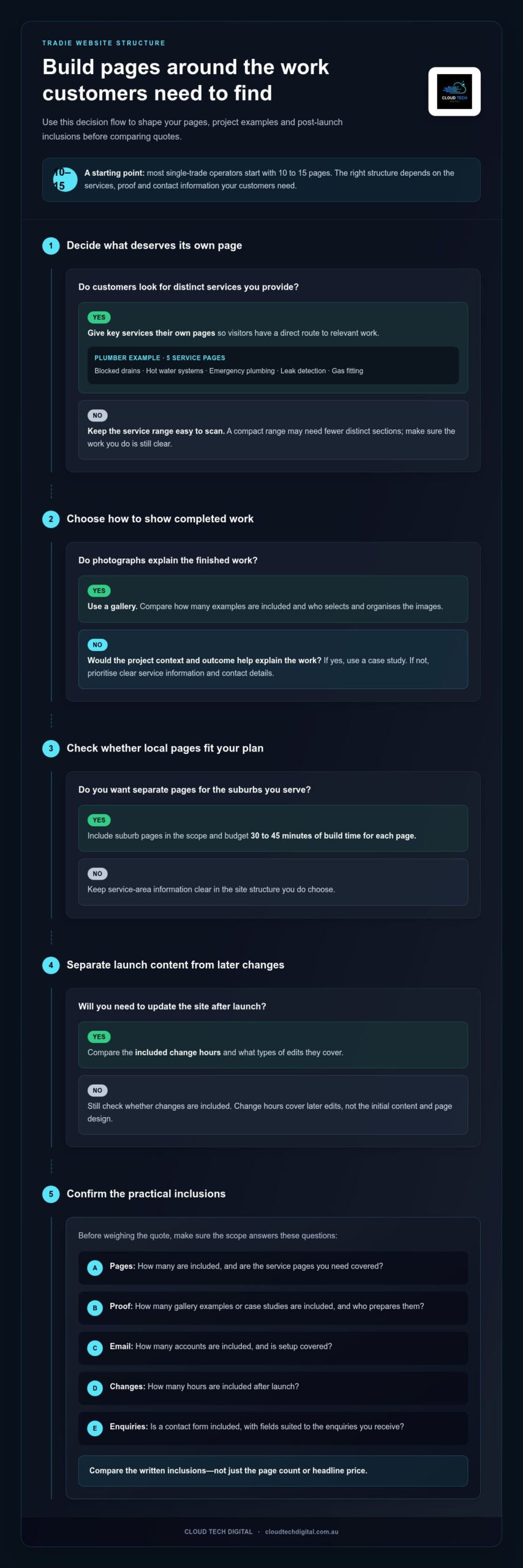
Most single-trade operators start with 10 to 15 pages. A plumber may split services into five pages: blocked drains, hot water systems, emergency plumbing, leak detection and gas fitting. Separate pages give visitors a direct route to relevant work, while a gallery or case study shows completed jobs. Suburb pages can support local targeting, with each page budgeted at 30 to 45 minutes of build time.
Use a gallery when photographs explain the finished work; use a case study to show the project context and outcome. Both require suitable images and organised content, so compare how many examples each package includes and who prepares them.
Features and their effect on price
Features shape the work beyond the page count. A contact form needs fields suited to your enquiries, while a gallery needs images selected and arranged. Check how many email accounts each package includes and whether setup is covered. These inclusions differ from page design: an extra account is not another service page, and change hours cover later edits rather than initial content.
For example, Serene Family Dental’s Google PageSpeed score rose from 45 to 91 after a rebuild. That case shows why performance can be part of a website brief, alongside layout and content. For your own site, compare the planned features, included changes and mobile presentation before choosing a package.
Specialist tradie website provider pricing
A specialist provider builds around the way trade customers find services and make enquiries. The useful comparison is not simply a template against a custom design; it’s whether the package fits your trade, content and day-to-day needs. A provider’s exact price depends on the project scope and inclusions, with the figure given after a quote request.
Look for trade-specific decisions in the proposed site. A plumber may need clear pathways to urgent services, while landscapers may rely on strong project photos to show finished work. A template can offer a quicker starting point, but its layout may need adjustment to present each trade’s services clearly. Custom work can shape the page structure around the business rather than forcing content into a preset design.
Compare proposals based on the practical work involved, not just the label “specialist”. Check whether the package accounts for:
- Trade-specific service descriptions and page structure.
- Project photos, galleries and case studies.
- Mobile loading speed and a clear enquiry path.
- Updates, support and the handover of website access.
These details matter because they affect what visitors can do on the site. A landscaper’s gallery, for example, should make project photos easy to browse, while a plumber’s service page should make relevant enquiries straightforward. A clear brief helps a provider scope the design, content and functionality accurately.
Before comparing quotes, write down your priority services, target locations, preferred examples and required contact options. Then match each proposal to that list. A suitable template may cover a straightforward site; a more tailored build may better suit distinct services or a larger portfolio. Choose a scope that supports your customers’ next step without paying for features your business won’t use.
If you’re planning a trade-focused site, discuss a website approach built around your services and customer enquiries.
Cloud Tech Digital: Lead Generation Agency in Australia
Cloud Tech Digital can help when your website needs to create a clearer path from search to customer enquiry. Its web design work can shape service pages and landing pages around the work you want customers to find, while lead generation and pay-per-click advertising can help attract relevant prospects.
If you’re comparing website packages, consider how the site will work alongside your marketing. A well-structured page gives visitors a clear next step; targeted advertising can bring potential customers to it. The right starting point depends on whether your priority is a new website, a focused landing page or a stronger lead-generation approach.
Contact Cloud Tech Digital to discuss the next step for your trade business.
Make your website the start of your next enquiry
Understanding tradie website design costs in Australia is one step towards a stronger online presence. Next, decide what role your website should play: explaining your services, encouraging enquiries or supporting a broader marketing plan. That choice can help you set priorities and brief a project around the outcomes that matter to your business.
Cloud Tech Digital can support that next step through lead generation, pay-per-click and Facebook Ad Management. If your site needs a stronger foundation, its web design and landing page services can help connect a visitor’s next click with a clear action. The right approach depends on what you want your online marketing to achieve.
Ready to plan a practical next step for your business? Contact Cloud Tech Digital to discuss your goals. A clear plan can help you move forward with confidence.
Frequently Asked Questions
Does a website actually pay for itself?
Yes, a website can pay for itself when the profit from jobs it helps generate exceeds its build and ongoing costs. Track enquiries by source, note which become booked work, then compare the resulting gross profit with website spending. For example, a roofer can measure enquiries from a campaign landing page and count the jobs those leads secure. This gives you a clearer measure of return than visitor numbers alone.
How much does a tradie website cost in Australia in 2026?
Custom agency work can exceed A$10,000. Treat these as market comparisons, not fixed quotes: design complexity, content and required functionality affect the final scope.
What do Australian web designers charge for tradie website design and development?
These are different market estimates, not a single standard rate. A site with custom layouts, more content or extra functionality requires a different scope.
What is the cost of DIY website builders versus hiring an Australian web designer?
Setup can take 20 to 40 hours, including copy, images and mobile adjustments. Compare the cash outlay with the time you’ll spend building, maintaining and improving the site yourself.
How long does it take to build a tradie website in Australia?
A DIY build can take 20 to 40 hours of setup work, from preparing copy and images to connecting the domain and adjusting the mobile view. A professional project’s calendar time depends on its scope and how quickly content and feedback are ready. Before work begins, organise service details, project photos and contact information so the designer can build without waiting on key material.
What questions should tradies ask before choosing a website designer or agency?
Ask what the quoted scope covers, who supplies the copy and photos, and how many pages and email accounts are included. Clarify who owns the domain and website access after launch, and what support or changes are covered. Also ask how the design handles mobile visitors, enquiries and search visibility. Getting these details in writing makes package comparisons clearer and reduces surprises during handover.
