


Google Ads can help plumbers reach nearby customers, and local services ads for plumbers charge for leads rather than clicks. Before a Local Services Ads campaign goes live, the business must complete screening and verification.
It’s understandable to weigh up whether paid advertising will bring in worthwhile work. The answer depends on more than visibility: the right ad format, service area and ability to turn enquiries into booked jobs all matter.
This guide explains how Google Ads can work for Australian plumbers, how Local Services Ads differ from Search Ads, and what to consider when targeting suburbs, cities or postcodes. It also covers eligibility, setup and how to assess whether an advertising approach fits your business. You’ll have a clearer basis for deciding where to focus local marketing and what to measure once a campaign is running.
Key Takeaways
- Compare lead-based Local Services Ads with click-based Search Ads, then choose the format that suits your job types and enquiry goals.
- Build commercial and emergency campaigns around the specific plumbing services customers need, with clear, accurate ad claims.
- Focus your targeting on suburbs and service areas you can realistically cover, and match keywords to local customer intent.
- Check eligibility and complete the required screening and verification before expecting a Local Services Ads campaign to go live.
- Use campaign results to assess lead quality and refine your local reach; targeted pay-per-click advertising and lead generation can help bring that work together.
Are Google Ads worth it for plumbers?
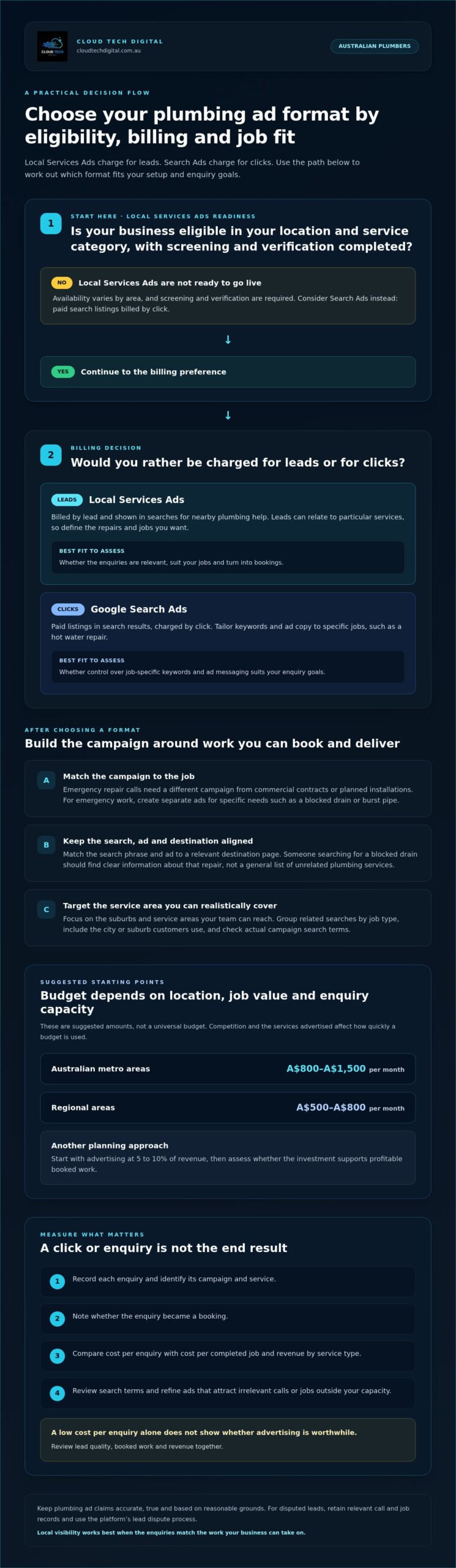
Google Ads can generate plumbing enquiries, but the best format depends on how customers search and how you want to pay. Local Services Ads for plumbers charge for leads, while Search Ads charge for clicks.
Local Services Ads and Google Ads
Local Services Ads appear in searches for nearby plumbing help and are billed by lead. Google Search Ads place paid listings in search results and charge by click. Search Ads let you tailor keywords and ad copy to specific jobs, such as a hot water repair. Compare lead quality, job fit and bookings, not visibility alone.
How Plumbing Leads Are Generated
A customer searches for a plumber, sees an eligible Local Services Ads listing and contacts the business through the ad. Screening and verification must be completed before the campaign goes live. Leads can relate to particular services, so define the repairs and jobs you want. Track which enquiries become bookings to judge whether the channel is working.
Google Local Services Ads are available to plumbers in eligible Australian locations and service categories. Screening and verification are required, and location and business details affect eligibility. Availability varies by area, so treat the setup requirements as part of your decision, not an afterthought.
Costs use different units, so compare them carefully. These are market figures, not a forecast for an individual campaign.
That comparison only matters if the lead is relevant and the job gets completed. Review lead quality, booked work and revenue together. A low cost per enquiry alone doesn’t show whether advertising is worthwhile.
Organic SEO serves a different role and timeline. Useful service pages and local search visibility can attract customers without paying for each ad click or lead. Paid Google Ads can reach searchers sooner, while SEO builds longer-term visibility. Using both can balance immediate demand with ongoing discovery.
Plumbing ad claims must be accurate, true and based on reasonable grounds, according to the Australian Competition and Consumer Commission (ACCC). Reviews and ratings give searchers feedback about customer experiences. Ask for honest reviews and aim for three to five fresh reviews a week. For a disputed lead, keep relevant call and job records, then use the platform’s lead dispute process to explain the issue.
What is the best way to advertise a plumbing business?
Choose advertising based on the jobs you want booked, your service area and your capacity. An emergency plumber seeking urgent repair calls needs a different campaign from a business pursuing commercial contracts or planned installations.
For emergency work, create separate ads for specific needs, such as a blocked drain or burst pipe. Match the search phrase and ad to a relevant destination page. Someone searching for a blocked drain should find clear information about that repair, not a general list of unrelated plumbing services.
Commercial plumbing campaigns can focus on larger projects and contracts. Treat this as an example, not a forecast. Track whether enquiries match your commercial work and become suitable bookings.
Set the budget by considering location, job value and the number of enquiries your team can handle. Suggested Google Ads budgets for plumbers are A$800 to A$1,500 per month in Australian metro areas, and A$500 to A$800 per month in regional areas. These are suggested starting points, not a universal amount. Competition and the services advertised affect how quickly a budget is used.
Business size changes the planning. Another approach is to start with advertising at 5 to 10% of revenue, then assess whether that investment supports profitable booked work.
Measure more than clicks. Before launch, set up a simple tracking process: record enquiries, identify their campaign and service, then note whether each became a booking. Compare cost per enquiry with cost per completed job and revenue by service type. Review search terms regularly and refine ads if they attract irrelevant calls or jobs outside your capacity.
A useful landing page keeps the booking path clear. Include the advertised service, the areas covered and a direct way to enquire, then check whether visitors contact you. A focused plumbing landing page can connect an emergency or commercial ad with the information that customer needs before booking.
A plumbing business’s targeted advertising and local SEO generated more than 1,700 clicks. Most people searching “plumber near me” call one of the three businesses in Google’s map pack.
High-intent plumbing keywords and local targeting
Strong keyword choices connect a plumbing search with a service you provide. Build each campaign around the customer’s need, the job type and the areas you serve. Someone searching for an urgent blocked drain repair has different intent from someone researching plumbing courses.
Buyer-intent searches often include a service, a location or a request to book. Examples include “emergency plumber near me”, “blocked drain plumber in my area” and “hot water system repair in [suburb]”. Group related searches by job type, then match each group with relevant ad copy. This helps you reach customers looking for a plumber, rather than broad searches with unclear intent.
Start local keyword research with the services you want to promote. Add the city or suburb customers use, then compare those phrases with actual campaign search terms. For example, assess “burst pipe repair” alongside “plumber near me”. Keep separate groups when the job or service area calls for different landing page content.
Negative keywords filter out searches that don’t fit your work. Review search terms and exclude irrelevant intent, such as “plumbing jobs”, “plumbing course” or “DIY drain repair”, if those searches aren’t bringing suitable customers. Don’t block a term just because it looks broad. Check whether it has generated relevant enquiries before changing the campaign.
Call extensions, also called call assets in Google Ads, give searchers a direct way to call from an ad. Use them for services where a phone conversation helps secure a booking, such as an emergency repair. Keep displayed business details accurate and assess calls alongside form submissions. A click or call isn’t the same as a completed job.
Connect each ad group to a landing page that matches its keyword and service. Someone searching for a hot water repair should find that service clearly, not a generic page about every plumbing job. Local pages can name the areas served and explain the relevant work. Make the information useful and distinct, rather than creating near-identical pages that only swap suburb names.
Use “plumber near me” searches as a prompt to assess local visibility, not as a reason to target every location. Google’s map pack shows three businesses, so precise service-area choices and relevant local information matter. Review search terms and enquiry quality regularly, then adjust keywords, exclusions and landing pages to focus on jobs that become bookings.
Targeting local suburbs, cities, postcodes, and radiuses
Local targeting helps a plumbing campaign reach customers within a workable service area. Choose locations based on where your team can complete jobs and which areas generate suitable enquiries.
Local Area Targeting Options
Google Ads can target selected suburbs, cities, postcodes or defined radiuses. A plumbing business might choose nearby suburbs instead of advertising across an entire state. Facebook Ads Manager can target a 20-kilometre radius around an office. Compare each option with travel time, job type and the places your team can realistically serve.
Set location targeting around practical coverage, not a broad map boundary. Separate areas your team can attend promptly from those requiring longer travel. Then review where enquiries come from and which locations produce suitable jobs. Keep, narrow or expand each target area using actual outcomes, not clicks alone.
Suburb-Targeted Bids
Suburb-level bid adjustments let you respond to locations that perform differently. Compare enquiry quality between nearby suburbs and areas farther from your base. Prioritise locations producing booked work and reduce emphasis on areas generating irrelevant enquiries. Check completed job outcomes before changing bids, because clicks alone don’t show which locations are valuable.
Use location reports to compare impressions, clicks, calls and bookings by area. If a suburb attracts searches but few completed jobs, inspect the search terms and landing page before changing bids. The issue could be mismatched service intent, unclear coverage or a page that doesn’t explain the advertised repair. Adjust one part of the campaign at a time to understand the effect.
Local SEO supports paid targeting by helping customers find useful service information in organic search results. Create a suburb page only when it adds specific value, such as explaining services available there or how your team covers nearby areas. Avoid near-identical pages that only replace the suburb name. Each page should describe the plumbing work clearly and offer a relevant next step.
Connect each location-focused ad to a matching landing page. A search for a blocked drain plumber in a particular suburb should lead to a page explaining the service and its coverage. This helps customers decide whether to enquire and gives you a clearer way to assess which areas convert.
Review location results as the campaign builds data. Compare where a customer searched with where the job took place, then record whether the enquiry became booked work. This distinction helps identify wasted clicks, refine coverage and focus advertising on areas that fit your team’s capacity across Australia.
Eligibility for local service businesses
Eligibility for Local Services Ads depends on the plumbing category and service area available to the business. Screening and verification must be completed before a campaign goes live, so treat these checks as essential setup steps, not optional extras.
First, check whether plumbing is an eligible service in your intended Australian location. Google’s availability can differ by category and area, so options may vary between locations. Keep the service area realistic: include places your team can reach and serve, rather than selecting locations simply to increase traffic.
Next, prepare accurate business information and complete the screening and verification steps shown during setup. Make sure selected services reflect the work you actually do. For example, a business advertising hot water repairs should be able to handle those enquiries. Don’t list services that don’t match your team’s capabilities or the work you want booked.
Check every public-facing claim before publishing. The Australian Competition and Consumer Commission (ACCC) says claims about plumbing services must be accurate, true and based on reasonable grounds. This applies to statements about emergency work, service areas and repair outcomes. Use clear wording and ensure your ad and website describe the same services.
Prepare a useful website destination for visitors who want more detail before contacting you. A mobile landing page should make the advertised service and service area easy to understand. For example, a hot water repair ad should lead to information about that work, not a broad page without a clear next step. A mobile website should load in under three seconds to avoid unnecessary friction.
Photos can improve the website experience by showing real examples of completed plumbing work. Choose images relevant to the advertised service, such as a hot water system installation, and avoid captions that imply work or credentials you can’t substantiate. Photos don’t replace eligibility checks; they help visitors understand the business after reaching its page.
Before launch, follow this sequence: confirm category and location availability, complete screening and verification, review service details, then test the customer journey on mobile. Check that visitors can understand the offer and find a clear way to enquire. If the category or service area isn’t eligible, standard Google Search Ads can still target relevant plumbing searches.
Use this eligibility checklist to plan your setup and build a plumbing landing page that supports the services you advertise.
Cloud Tech Digital: Lead Generation Agency in Australia
Cloud Tech Digital helps plumbing businesses plan local marketing to generate leads. If you’re weighing Local Services Ads against other paid search options, its Pay Per Click Agency in Australia offering can align campaign targeting with the plumbing work and areas you want to reach.
When ads attract clicks but few useful enquiries, the website experience may also need attention. Cloud Tech Digital’s Web Design Agency in Australia offering supports a more relevant path from an ad to service information and an enquiry. The aim is to connect advertising with a practical customer journey, rather than treating clicks as the final measure.
Contact Cloud Tech Digital to discuss your plumbing business’s local marketing.
Turn your local advertising plan into action
Your next step is to decide what a useful enquiry looks like for your plumbing business. Set that standard before expanding campaigns, so marketing decisions stay tied to the work you want to win. Whether local services ads for plumbers fit your plans depends on how well the channel aligns with your services, service area and lead goals.
If you want help shaping your approach, Cloud Tech Digital offers lead generation, pay-per-click and Facebook ad management for Australian businesses. These services can connect your advertising activity with a clearer plan for reaching local customers.
Contact Cloud Tech Digital to discuss your plumbing business’s advertising priorities. A focused next step can help you move forward with confidence.
Frequently Asked Questions
What Are Google Local Service Ads?
Google Local Services Ads are paid placements that connect people searching for local help with service businesses. A plumber’s profile presents relevant business and service information to help customers decide whether to make contact. The format suits searches with clear service intent, such as finding a plumber for a repair. Keep profile details aligned with your actual work, service coverage and capacity to handle enquiries.
Ready to Run Plumber Ads That Actually Work?
Start by defining the jobs you want, the areas you serve and how you’ll judge a useful enquiry. Decide who will respond to calls and forms, and make sure your website clearly explains the advertised service. Then track which enquiries become suitable bookings, not just clicks. If campaign planning or management takes time away from the business, pay-per-click support can organise advertising around those priorities.
Which Australian plumbing services and business types are eligible for Local Services Ads?
Eligibility depends on the plumbing service category and location available during account setup. Australian plumbers should look for their specific category and service area rather than assume every specialty is included. Residential repairs, hot water work, blocked drains and commercial plumbing are different jobs, but those labels alone don’t establish eligibility. The available account categories and screening steps determine whether a business can proceed with Local Services Ads.
How do plumbers set up and manage a Local Services Ads account in Australia?
Begin with Google’s Local Services Ads setup and select the plumbing category and service area that match your business. Provide the requested business details, then complete screening and verification before launch. Once active, keep services and coverage accurate, review incoming leads and record which enquiries become booked jobs. Use that information to refine the profile and campaign decisions, and raise disputed leads through the account’s dispute process.
How do Local Services Ads compare with Google Search Ads for Australian plumbers?
Local Services Ads charge for leads, while Google Search Ads charge for clicks. Search Ads give plumbers more control over keyword selection, ad copy and the page a searcher reaches. Local Services Ads centre on the business profile and eligible service categories. Compare the options by the types of enquiries they produce and how often those enquiries become suitable jobs. SEO can complement both by building organic visibility over time.
