
Most homeowners spend months researching before they call a builder. They search for ideas, costs, build times and builders in their area, then put together a shortlist. SEO for builders is how you get on that shortlist early, so when they’re ready to talk, your name is already the one they trust.
Referrals are still gold, but they come and go. A website that ranks on Google brings in steady enquiries for the projects you actually want, whether that’s custom homes, extensions, renovations or commercial work.
This guide shows Australian home builders and construction companies exactly how to rank: the pages you need, the trust signals Google and homeowners look for, how to turn rankings into quote requests, and how long it really takes.
Quick Answer
- SEO for builders means ranking on Google for the projects you build, in the areas you work.
- Create a separate page for each project type, plus a portfolio of real completed work.
- Optimise your Google Business Profile and collect detailed reviews that mention the project and suburb.
- Show your licence, HIA or Master Builders membership, insurance and warranties.
- Expect real movement in 4 to 6 months, and strong results in 6 to 12.
In this guide
What Is SEO for Builders, and Why Does It Work?
SEO (search engine optimisation) is the work of getting your website to show up when people search Google for what you build. For a builder, that means searches like “custom home builders Geelong”, “home extension builder Brisbane” or “commercial builder Perth”.
It works especially well for building because the buying cycle is long. A homeowner planning a $600K knockdown rebuild doesn’t pick the first ad they see. They read, compare, check reviews and look at past projects. Every time your website answers one of their questions, you build trust before you’ve even met.
Google is also no longer the only place people search. AI tools and Google’s AI answers pull from websites that explain things clearly. The same SEO work that helps you rank also helps your business get mentioned in those answers.
SEO for Home Builders vs Construction Companies
Not every builder needs the same SEO. What your customers search for depends on what you build:
| Builder type | What clients search | Pages you need |
|---|---|---|
| Custom home builders | “custom home builder [suburb]”, “architect designed homes” | Custom homes page, design process, portfolio of past homes |
| Project and volume home builders | “new home builders [growth area]”, “house and land packages” | Home designs, display home locations, build process |
| Renovation and extension builders | “home extension builder”, “second storey addition cost” | A page per service: extensions, renovations, knockdown rebuilds |
| Commercial and construction companies | “commercial builder [city]”, “fit-out contractor” | Sector pages (medical, retail, industrial), capability statement, projects |
If you do more than one type of work, give each its own section of the website. A homeowner looking for a bathroom renovation and a developer looking for a commercial builder want very different things.
Keywords Builders Should Target
Builder searches fall into three groups. You need content for all of them:
- Research searches: “how much does a home extension cost”, “how long does it take to build a house”. These suit cost guides and blog posts, and they bring people in early.
- Comparison searches: “custom home builders Sydney”, “best renovation builders [suburb]”. These suit your service and location pages.
- Ready-to-act searches: “builder near me”, “get a quote for a home extension”. These suit pages with a clear quote form and phone number.
Start with the projects you most want more of, in the areas you most want to work. It’s better to rank first for “home extensions Ballarat” than tenth for “builder Victoria”.
8 Proven SEO Steps for Builders
1. Create a Page for Each Project Type
A single “Services” page listing everything won’t rank for anything. Give each project type its own page: new homes, custom homes, extensions, renovations, knockdown rebuilds, granny flats or commercial builds. Each page should explain the process, typical timeframes, what affects cost, real photos and a quote form.
2. Build Location Pages the Right Way
If you work across several regions, create a page for each main area, but only where you genuinely build. Fill each one with local content: projects you’ve completed there, local council or planning notes, and the suburbs you cover. Thin copy-paste pages with only the suburb name changed can hurt more than help.
3. Turn Completed Projects Into Portfolio Pages
Your past projects are your best SEO and sales content. Instead of one photo gallery, give each major project its own page with:
- The project type and suburb in the title, like “Double Storey Extension in Camberwell”
- The brief, the challenges and how you solved them
- Build time and key materials
- Before, during and after photos with descriptive file names and alt text
- A short quote from the client
4. Optimise Your Google Business Profile
For local searches, your Google Business Profile is often seen before your website. Choose accurate categories, set your service areas, add photos of real projects every month, post updates and list your services. Google’s own guide to improving your local ranking explains the basics, and our guide to Google Business Profile for tradies goes further.
5. Collect Detailed Reviews
Ask every happy client for a Google review, and encourage them to mention the project type and suburb, like “they built our extension in Essendon on time and on budget”. Detailed reviews help rankings and convince the next client. Here’s how to get more Google reviews without feeling pushy.
6. Show Your Licence, Memberships and Warranties
Building is a high-trust purchase. Display your builder’s licence number, membership of the HIA or Master Builders, insurance details, warranty information and any awards. These reassure homeowners, and member directories can also link back to your website.
7. Earn Links From Suppliers and Partners
Links from relevant websites tell Google you’re a real, trusted business. Good sources for builders include supplier and manufacturer “find a builder” pages, industry associations, architects and designers you work with, local news coverage of your projects and community sponsorships.
8. Make Your Website Fast and Easy to Use
Most people browse builders on their phones. Your site needs to load quickly, with compressed images, a click-to-call button and a short quote form. Test any page with Google’s PageSpeed Insights. Adding structured data for construction businesses also helps Google understand what you do and where.
Content That Wins Building Work
The best builder content answers the questions clients ask in your first meeting. Ideas that work well:
- Cost guides, like “How much does a second storey addition cost in Melbourne?”
- Process pages that explain each stage of a build, from design to handover
- Planning and approval explainers for your area
- Material and design comparisons, like brick veneer vs weatherboard
- Project stories that show how you solved a tricky site or brief
Write in plain English, give real ranges rather than vague answers, and link each article to the matching service page. Our guide to content marketing for builders has a full topic list.
Turning Rankings Into Enquiries
Traffic only matters if it turns into quote requests. Every service page should make the next step easy:
- A click-to-call phone number at the top on mobile
- A short quote form asking for the project type, suburb, rough budget and timeframe
- Real project photos and reviews close to the form
- A clear promise of what happens next, like “We’ll call you within one business day”
Those form questions also filter out tyre kickers before you spend time quoting. See our tips on building a quote form for your website and website design for tradies.
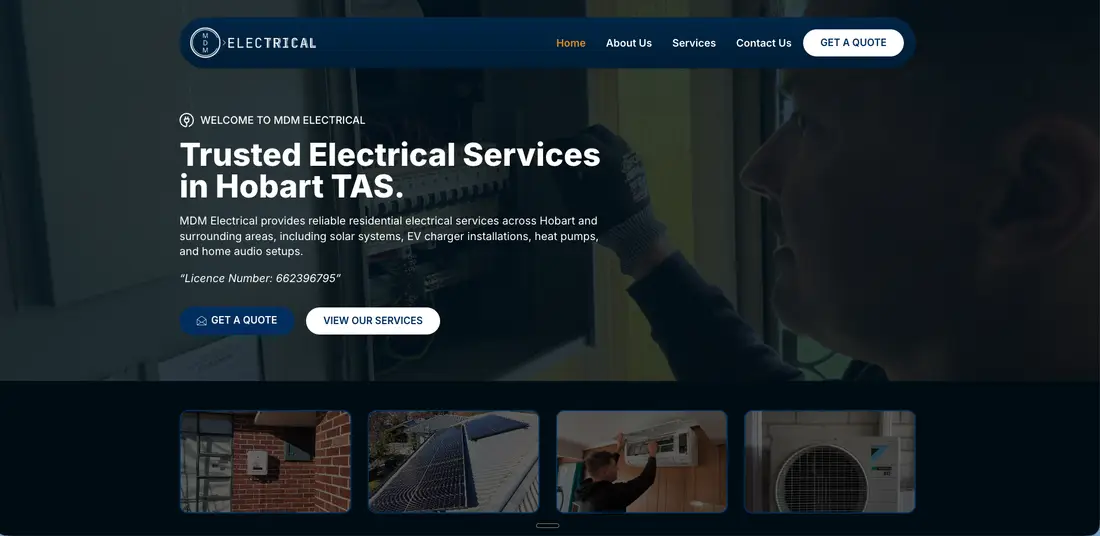
Track your enquiries by source, so you know which pages and searches bring real projects. Rankings are a means to an end. Signed contracts are the goal.
Pair SEO With Google Ads While It Builds
SEO takes months to build. Google Ads can bring enquiries in the meantime. For Prolific Civil, a civil construction business, our Google Ads campaign brought in 35+ leads in the first month. Many builders run ads while their SEO grows, then lean more on organic traffic over time. Our guides to Google Ads for builders and SEO vs PPC compare the two.
How Long Does SEO for Builders Take?
Be wary of anyone promising page one in a few weeks. A realistic timeline for most builders:
- Months 1 to 3: fixing the website, building service and project pages, setting up your Google Business Profile and tracking.
- Months 4 to 6: rankings start climbing for local and project searches, and the first organic enquiries arrive.
- Months 6 to 12: stronger rankings, steadier enquiries and less reliance on paid ads and referrals.
Competitive cities like Sydney and Melbourne take longer than regional areas. The builders who see the best results keep adding projects, reviews and content every month.
What Does SEO for Builders Cost?
There’s no single price, because SEO for builders depends on how much work your website needs and how competitive your area is. The main factors are:
- Your starting point: a slow or outdated website needs fixing before SEO can work.
- Your market: ranking for custom home builders in Sydney takes more work than a regional town.
- How many services and areas you target: each project type and location needs its own quality page.
- Content and projects: regular project pages, reviews and articles keep rankings climbing.
Think of SEO for home builders as an investment measured in projects, not clicks. One extra extension or custom home a year usually covers the cost many times over. For a plan built around your business, chat with our director Henry.
SEO for Builders Checklist
Use this quick SEO for builders checklist to see where your website stands today:
- A separate page for each project type you build
- Genuine location pages for your main service areas
- Individual project pages with photos, suburb and scope
- A complete Google Business Profile with monthly photos
- A steady flow of detailed Google reviews
- Licence number, HIA or Master Builders membership and warranties on show
- Links from suppliers, associations and local media
- A fast, mobile-friendly website with compressed images
- A short quote form and click-to-call on every service page
- Call and form tracking, so you know which pages bring projects
If you can’t tick at least seven of these, there’s an easy win waiting. Our local SEO guide for tradies covers several of these steps in more detail.
Common SEO Mistakes Builders Make
- One page for every service, so nothing ranks well
- A gallery with no words, so Google can’t tell what or where you built
- Copy-paste location pages with only the suburb name changed
- Hiding your licence and memberships in the footer, or leaving them out
- A slow website full of huge, uncompressed photos
- No tracking, so you can’t tell which pages bring real projects
- Giving up after two months, just before results usually start
How We Help Builders Win More Projects
We work with home builders, renovators and construction companies across Australia to turn their websites into steady sources of project enquiries. We:
- Plan your keywords around the projects and areas you want more of
- Build service, location and project pages in-house
- Optimise your Google Business Profile and set up review requests
- Make your website fast, mobile-friendly and easy to enquire from
- Track calls and forms, and report in plain English
See how our SEO services for tradies and builders work, explore digital marketing for builders, or chat with our director Henry about your business.
Get a Free SEO Plan for Your Building Business
Tell us what you build and where. We’ll show you which searches you could rank for and what it would take.
Frequently Asked Questions
Is SEO for builders worth it?
Yes, for most builders. Building projects are high value and clients research for months, so ranking well brings steady enquiries without paying for every click.
How does SEO for home builders differ from construction company SEO?
Home builders target homeowners with project, design and cost content. Construction companies target developers and businesses with sector pages, capability statements and commercial projects.
What pages should a builder’s website have?
A page for each project type, location pages for your main areas, individual project case studies, an about page with your licence and memberships, and a clear quote page.
Do builders need a blog?
It helps. Cost guides, process explainers and project stories bring in people early in their research and support your service pages.
How do builders rank locally?
Optimise your Google Business Profile, collect detailed reviews, build genuine location pages and earn links from local suppliers and associations.
How long until SEO brings in enquiries?
Usually 4 to 6 months for the first organic enquiries, and 6 to 12 months for strong, steady results.
Do I need a new website for SEO?
Not always. If your current site is fast, mobile-friendly and easy to edit, it can usually be improved. If it is slow, outdated or built on a platform that is hard to change, a rebuild is often quicker and cheaper in the long run, and it gives your SEO a stronger foundation.
Should builders target suburbs or whole cities?
Start with the suburbs and regions where you genuinely build and want more work. Specific areas are easier to rank for and bring enquiries closer to home. Once those pages rank, expand to nearby areas and broader city searches like custom home builders in your capital city.
Should builders use SEO or Google Ads?
Ideally both. Google Ads brings enquiries quickly while SEO builds, and SEO lowers your cost per lead over time.
Ready to Win More Building Projects From Google?
SEO for builders isn’t a quick fix, but it’s one of the best long-term investments a building business can make. Clear project pages, real portfolio work, strong reviews, visible credentials and a fast website add up to a steady stream of the projects you actually want.
We help builders across Australia, including Melbourne, Sydney, Brisbane, Perth and Adelaide. Book a free strategy call and we’ll show you where your website stands today.
Sources
- Google Search Central: SEO Starter Guide
- Google Business Profile Help: Tips to improve your local ranking
- Housing Industry Association and Master Builders Australia
- Schema.org: HomeAndConstructionBusiness
- Cloud Tech Digital case study: Prolific Civil
Last updated November 2026. Written by Henry Lam, Founder & Director of Cloud Tech Digital, who has spent 6+ years helping Australian tradies and builders win more work from Google and Meta.
Free strategy call
Want More Jobs Like These? Let’s Map Out Your Lead Plan.
Tell us your trade, your area and the jobs you want more of. We will show you where your leads should come from, what they are likely to cost and how fast you can expect results. No lock-in contracts, no pressure.
- Exclusive leads, never shared
- Clear reporting on cost per lead and jobs won
- 50+ five-star Google reviews from Australian tradies
